After-School Restraint Collapse
Why It Happens & How to Support Your Child
by Kyle Kick
BStrong Together Executive Director
What is After-School Restraint Collapse?
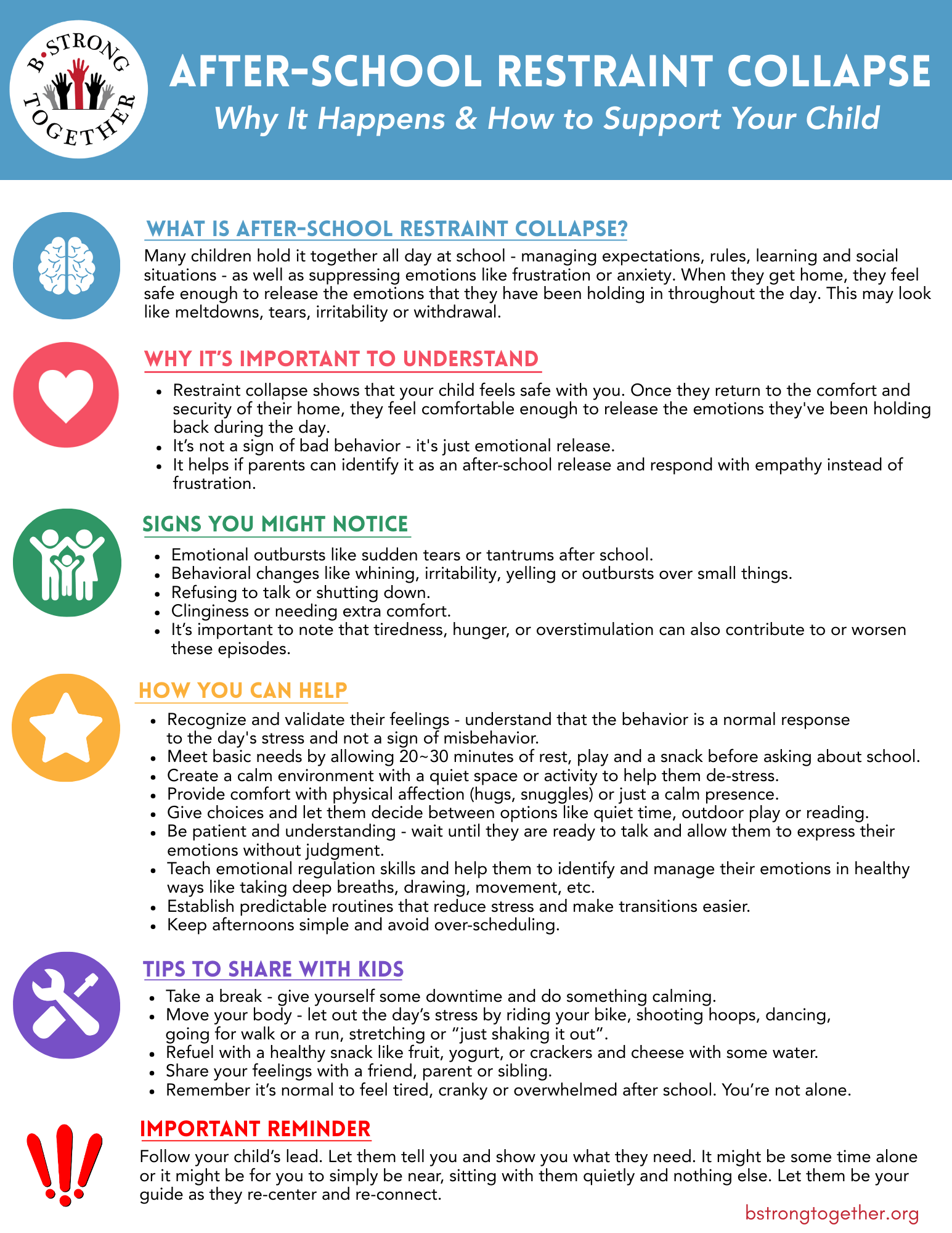
Many children (and even teens) hold it together all day at school – managing expectations, rules, learning and social situations – as well as suppressing emotions like frustration or anxiety. When they get home, they feel safe enough to release the emotions that they have been holding in throughout the day. This may look like meltdowns, irritability or withdrawal.
Why is it Important to Understand?
- Restraint collapse shows that your child feels safe with you. Once they return to the comfort and security of their home, they feel comfortable enough to release the emotions they’ve been holding back during the day.
- It’s not a sign of bad behavior – it’s just emotional release.
- It helps if parents can identify it as an after-school release and respond with empathy instead of frustration.
Signs You Might Notice
- Emotional outbursts like sudden tears or tantrums after school.
- Behavioral changes like whining, irritability, yelling or outbursts over small things.
- Refusing to talk or shutting down.
- Clinginess or needing extra comfort.
- It’s important to note that tiredness, hunger, or overstimulation can also contribute to or worsen these episodes.
How You Can Help
- Recognize and validate their feelings – understand that the behavior is a normal response to the day’s stress and not a sign of misbehavior.
- Meet basic needs by allowing 20~30 minutes of rest, play and a snack before asking about school.
- Create a calm environment with a quiet space or activity to help them de-stress.
- Provide comfort with physical affection (hugs, snuggles) or just a calm presence.
- Give choices and let them decide between options like quiet time, outdoor play or reading.
- Be patient and understanding – wait until they are ready to talk and allow them to express their emotions without judgment.
- Teach emotional regulation skills and help them to identify and manage their emotions in healthy ways like taking deep breaths, drawing, movement, etc.
- Establish predictable routines that reduce stress and make transitions easier.
- Keep afternoons simple and avoid over-scheduling.
Tips to Share with Kids
- Take a break – give yourself some downtime and do something calming.
- Move your body – let out the day’s stress by riding your bike, shooting hoops, dancing, going for a walk or a run, stretching or “just shaking it out”.
- Refuel with a healthy snack like fruit, yogurt, or crackers and cheese with some water.
- Share your feelings with a friend, parent or sibling.
- Remember it’s normal to feel tired, cranky or overwhelmed after school. You’re not alone.
IMPORTANT REMINDER
Follow your child’s lead. Let them tell you and show you what they need. It might be some time alone or it might be for you to simply be near, sitting with them quietly and nothing else. Let them be your guide as they re-center and re-connect.
~ Click on image below to download and print. ~