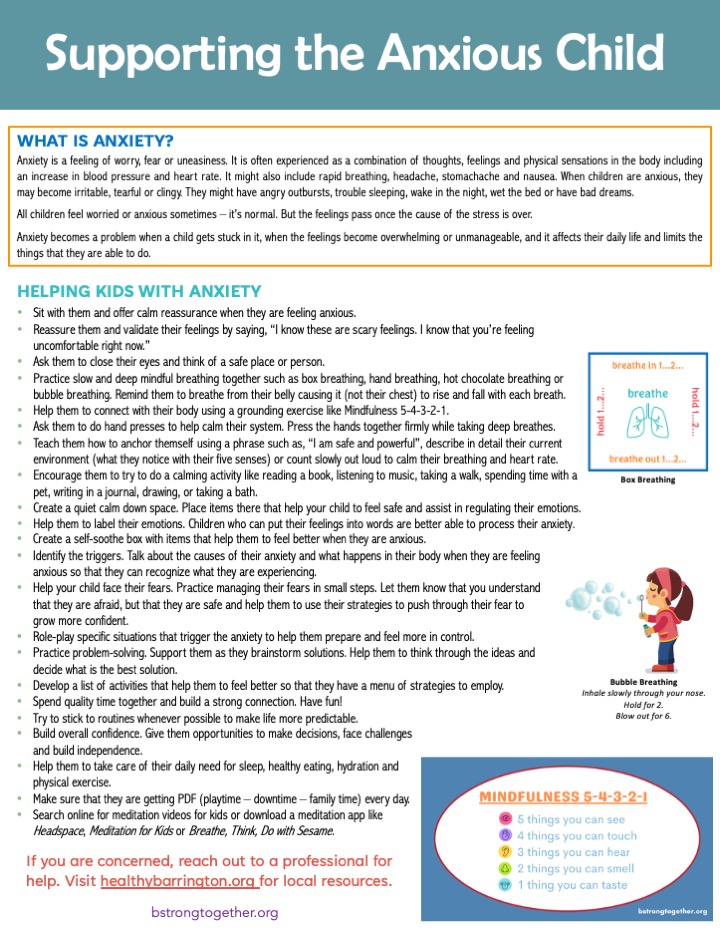
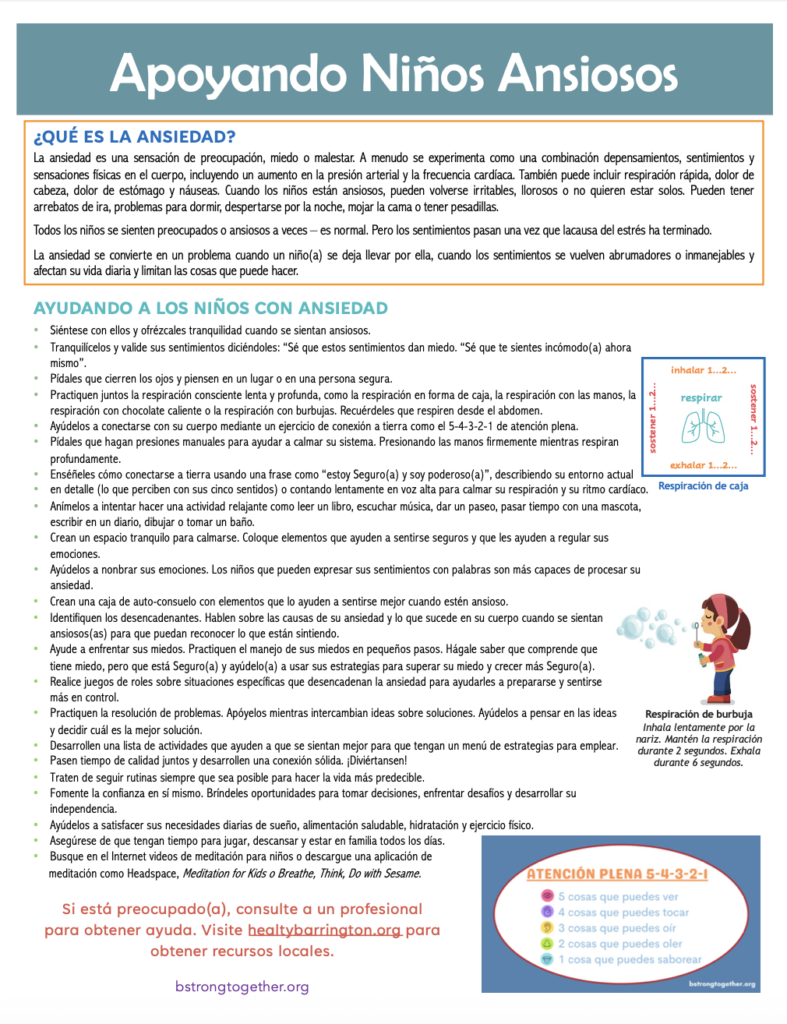
Anxiety is a feeling of worry, fear or uneasiness. It is often experienced as a combination of thoughts, feelings and physical sensations in the body including an increase in blood pressure and heart rate. It might also include rapid breathing, headache, stomachache and nausea. When children are anxious, they may become irritable, tearful or clingy. They might have angry outbursts, trouble sleeping, wake in the night, wet the bed or have bad dreams.
All children feel worried or anxious sometimes – it’s normal. But the feelings pass once the cause of the stress is over.
Anxiety becomes a problem when a child gets stuck in it, when the feelings become overwhelming or unmanageable, and it affects their daily life and limits the things that they are able to do.
Ways to Help Kids with Anxious Feelings
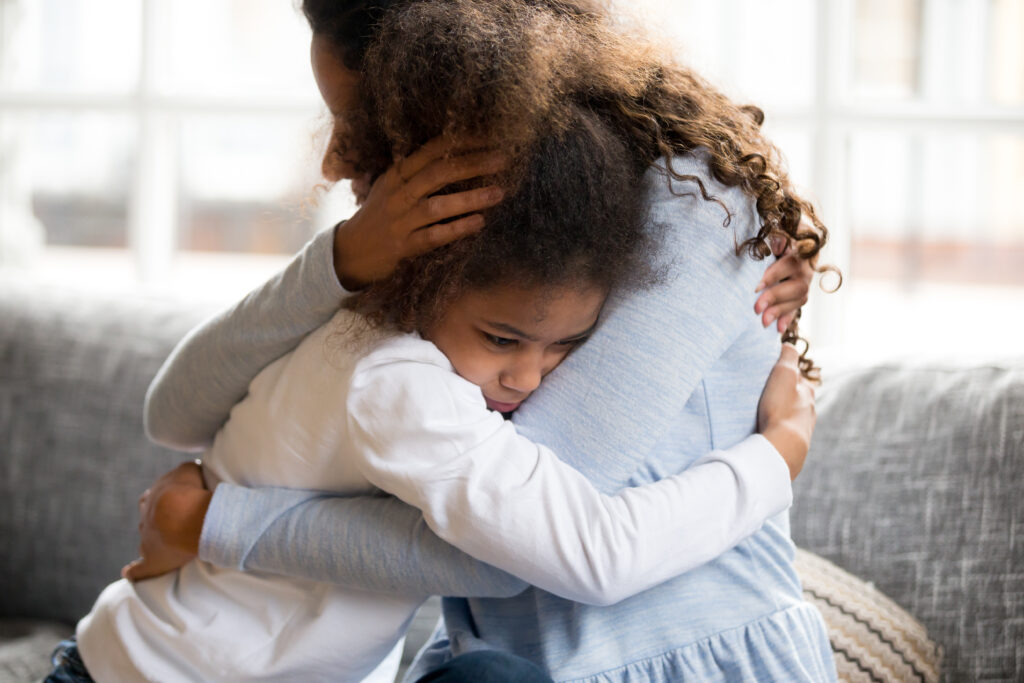
Sit with them and offer calm reassurance when they are feeling anxious.
Reassure them and validate their feelings by saying, “I know these are scary feelings. I know that you’re feeling uncomfortable right now.”
Ask them to close their eyes and think of a safe place or person.
Spend quality time together and build a strong connection. Have fun!
Try to stick to routines whenever possible to make life more predictable.
Create a quiet calm down space. Place items there that help your child to feel safe and assist in regulating their emotions.
Help them to label their emotions. Children who can put their feelings into words are better able to process their anxiety.
Create a self-soothe box with items that help them to feel better when they are anxious.
Help them to identify the triggers. Talk about the causes of their anxiety and what happens in their body when they are feeling anxious so that they can recognize what they are experiencing.
Help your child face their fears. Practice managing their fears in small steps. Let them know that you understand that they are afraid, but that they are safe and help them to use their strategies to push through their fear to grow more confident.
Role-play specific situations that trigger the anxiety to help them prepare and feel more in control.
Practice problem-solving. Support them as they brainstorm solutions. Help them to think through the ideas and decide what is the best solution.
Develop a list of activities that help them to feel better so that they have a menu of strategies to employ.
Build overall confidence. Give them opportunities to make decisions, face challenges and build independence.
Help them to take care of their daily need for sleep, healthy eating, hydration and physical exercise.
Make sure that they are getting PDF (playtime – downtime – family time) every day.