Tips for Back-to-School Success for Elementary Through High School
by Kyle Kick
BStrong Together Executive Director
A new school year brings exciting opportunities, new friendships, and fresh experiences. It can also bring worries, changes in routines and mixed emotions for children and teens. A little preparation before school begins can help your child feel more confident, connected and ready to learn.
Getting ready for the start of school early helps to prevent the chaotic rush that causes stress for parents and students alike. Giving yourself and your family a head start helps to create a calm, organized transition that lowers anxiety, builds excitement and sets up academic and emotional success in the year to come.
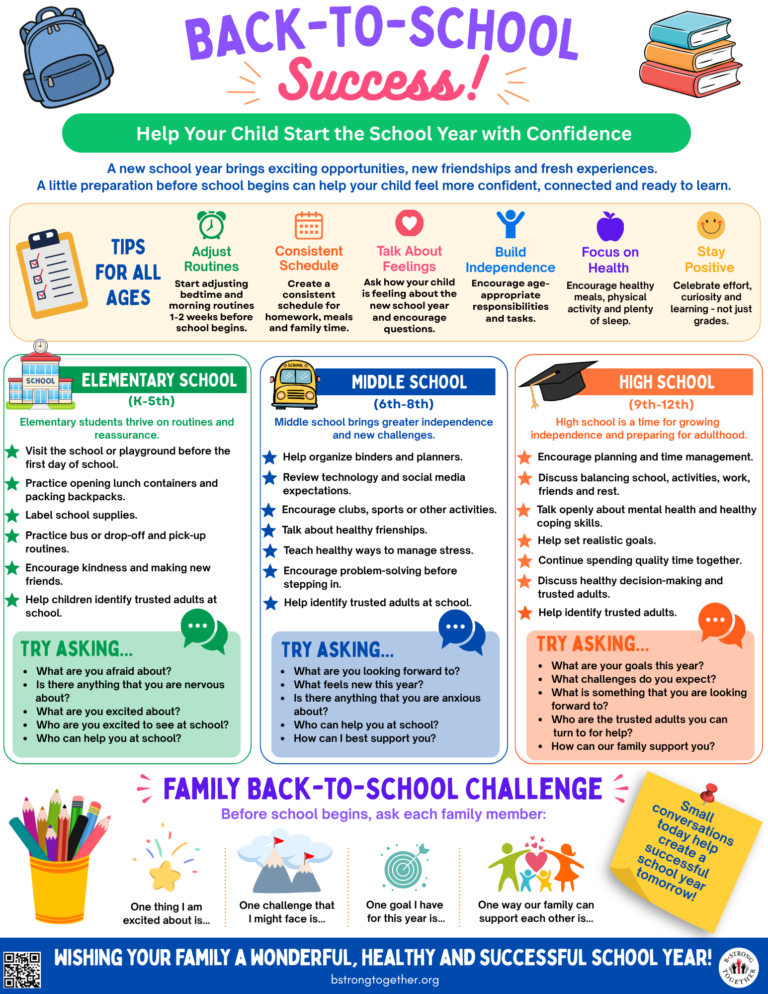
Tips for All Ages
Establish Healthy Routines
- Begin adjusting bedtime and wake-up times 1–2 weeks before school starts.
- Practice the morning routine so that the first day feels familiar.
- Create a consistent after-school routine for homework, activities and family time.
Talk About Feelings
- Ask how your child is feeling about the new school year.
- Normalize excitement, nervousness and uncertainty.
- Listen without immediately trying to solve every concern.
Build Independence
- Encourage children to complete age-appropriate tasks on their own.
- Let them practice packing backpacks, organizing supplies and preparing lunches when appropriate.
Focus on Health
- Encourage nutritious meals and snacks.
- Make physical activity part of the daily routine.
- Prioritize enough sleep for growing minds and bodies.
Stay Positive
- Share positive memories from your own school experiences.
- Celebrate effort, curiosity and learning — not just grades.
Tips for Elementary, Middle and High School
ELEMENTARY SCHOOL
(Kindergarten-5th grade)
Children in elementary school thrive on predictability and reassurance.
Parents can:
- Take your child to visit the school or playground before the first day if possible.
- Read books together about starting school.
- Label school supplies and practice using them.
- Review bus routes or drop-off and pick-up routines.
- Practice opening lunch containers and backpacks independently.
- Encourage making new friends by practicing introductions and kindness.
- Reinforce basic safety skills, including knowing who are their trusted adults.
Helpful Conversation Starters:
- What are you most excited to learn?
- Is there anything you’re wondering about?
- Who can you ask for help if you need it?
- What do you hope this school year will be like?
MIDDLE SCHOOL
(6th – 8th grade)
Middle school brings greater independence, changing friendships and new academic expectations.
Parents can:
- Help your child to organize binders, folders and planners.
- Practice using a calendar to keep track of assignments and activities.
- Discuss healthy friendships and respectful communication.
- Encourage involvement in clubs, sports, music or other activities.
- Review technology expectations and responsible social media use.
- Talk about managing stress and asking for help when needed.
- Encourage problem-solving before stepping in to fix every challenge.
Helpful Conversation Starters:
- What are you looking forward to this year?
- What feels different about middle school this year?
- How can I support you if things get stressful?
- What helps you feel confident?
HIGH SCHOOL
(9th-12th grade)
High school students are preparing for adulthood while balancing academics, friendships, activities and increasing responsibilities.
Parents Can:
- Encourage your teen to use a planner or digital calendar.
- Discuss balancing school, work, friends, activities and downtime.
- Talk openly about mental health and healthy ways to cope with stress.
- Encourage goal setting for academics, extracurricular activities and personal growth.
- Support increasing independence while remaining available for guidance.
- Review driving, online safety, making substance-free choices and healthy decision-making.
- Continue spending quality time together through meals, conversations and shared activities.
Helpful Conversation Starters:
- What goals do you have for this year?
- What challenges do you expect?
- How can we work together to help you succeed?
- Who are the trusted adults you can turn to if you need support?
Ways to Help Kids Get Ready for the Start of the School Year
Here is a step-by-step plan to build school-ready habits over a two or three week period before the start of the school year.
The goal during this period of time is to gently shift your child’s biological clock and introduce predictable anchors to the day.
- Shift sleep gradually: Move bedtime and wake-up times 15 minutes earlier every two to three days.
- Anchor meal times: Eat breakfast, lunch and dinner at the exact times your child will eat during the school year.
- Introduce “quiet hour”: Set aside 45 minutes in the afternoon for reading, puzzles, coloring or other quiet activities to rebuild stamina for focused, seated tasks.
- Audit school gear: Check last year’s backpacks, shoes and tech to see what still fits or needs replacing.
Phase 2: Week 1 Before School (The Dress Rehearsal)
This week mimics the actual school schedule to eliminate morning friction and build independence.
- Target school wake-up: Ensure your child is waking up at their official school-year time every day this week.
- Ditch morning screens: Keep TVs, tablets and phones off in the morning to teach the brain to focus on getting ready.
- Do a practice run: Pack backpacks, make lunches, get fully dressed and leave the house exactly when you will need to on day one.
- Set up a launchpad: Designate a specific hook or bin near the door where backpacks, shoes and jackets must live.
Remember…
Every child starts the school year differently. Some are eager, while others may feel anxious or overwhelmed. Your calm encouragement, consistent routines and willingness to listen can make a lasting difference.
Small conversations each day help to build trust, confidence and resilience throughout the school year.
~ Click on image below to download and print. ~