Talking with Tweens & Teens About Underage Drinking
A Parents Guide to Healthy, Honest Conversation
by Kyle Kick
BStrong Together Executive Director
The research is clear – strong parental disapproval is the NUMBER ONE reason teens give for why they chose not to drink. It is important to set clear expectations about alcohol, share your family values, explain the risks and establish a code word that your teen can text or say to you over the phone if they find themselves in a situation where they don’t feel comfortable. Make an agreement in advance that no matter what, if they give you the code word, you will come to help – no questions asked.
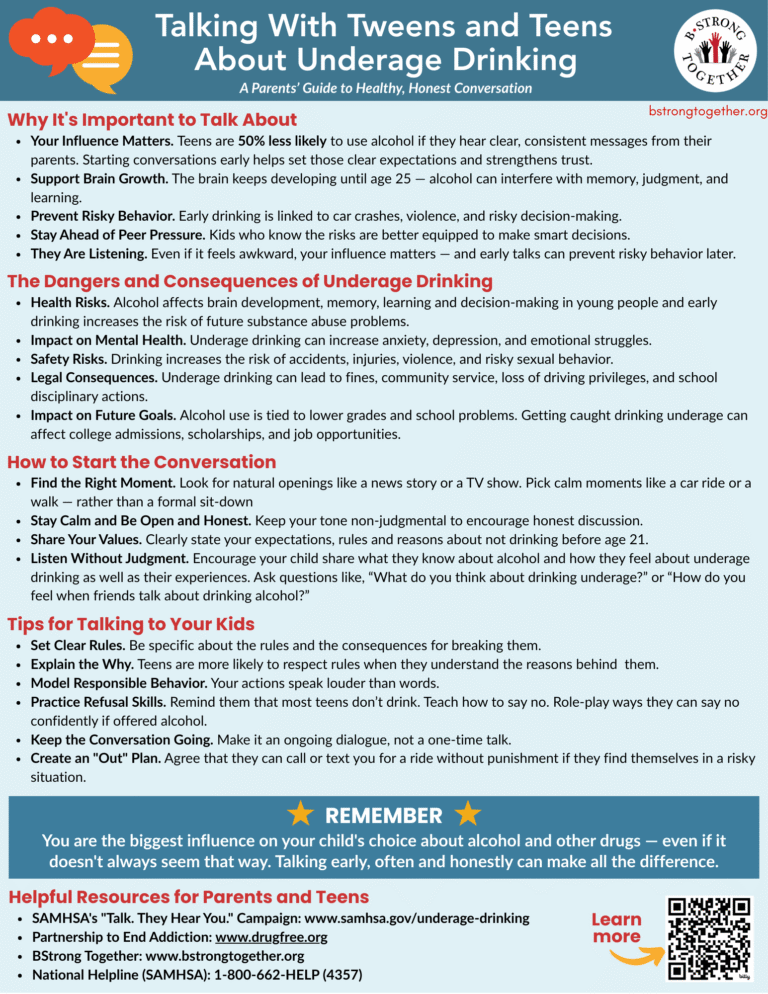
Why It’s Important to Talk About Underage Drinking?
- Your Influence Matters. Teens are 50% less likely to use alcohol if they hear clear, consistent messages from their parents. Starting conversations early helps set those clear expectations and strengthens trust.
- Support Brain Growth. The brain keeps developing until age 25 — alcohol can interfere with memory, judgment, and learning.
- Prevent Risky Behavior. Early drinking is linked to car crashes, violence, and risky decision-making.
- Stay Ahead of Peer Pressure. Kids who know the risks are better equipped to make smart decisions.
- They Are Listening. Even if it feels awkward, your influence matters — and early talks can prevent risky behavior later.
The Dangers and Consequences of Underage Drinking
- Health Risks. Alcohol affects brain development, memory, learning and decision-making in young people and early drinking increases the risk of future substance abuse problems.
- Impact on Mental Health. Underage drinking can increase anxiety, depression, and emotional struggles.
- Safety Risks. Drinking increases the risk of accidents, injuries, violence, and risky sexual behavior.
- Legal Consequences. Underage drinking can lead to fines, community service, loss of driving privileges, and school disciplinary actions.
- Impact on Future Goals. Alcohol use is tied to lower grades and school problems. Getting caught drinking underage can affect college admissions, scholarships, and job opportunities.
How to Start the Conversation
- Find the Right Moment. Look for natural openings like a news story or a TV show. Pick calm moments like a car ride or a walk — rather than a formal sit-down
- Stay Calm and Be Open and Honest. Keep your tone non-judgmental to encourage honest discussion.
- Share Your Values. Clearly state your expectations, rules and reasons about not drinking before age 21.
- Listen Without Judgment. Encourage your child share what they know about alcohol and how they feel about underage drinking as well as their experiences. Ask questions like, “What do you think about drinking underage?” or “How do you feel when friends talk about drinking alcohol?”
Tips for Talking to Your Kids
- Set Clear Rules. Be specific about the rules and the consequences for breaking them.
- Explain the Why. Teens are more likely to respect rules when they understand the reasons behind them.
- Model Responsible Behavior. Your actions speak louder than words.
- Practice Refusal Skills. Remind them that most teens don’t drink. Teach how to say no. Role-play ways they can say no confidently if offered alcohol.
- Keep the Conversation Going. Make it an ongoing dialogue, not a one-time talk.
- Create an “Out” Plan. Agree that they can call or text you for a ride without punishment if they find themselves in a risky situation – no questions asked.
Tips to Share with Your Tween or Teen
- It’s OK to Say No – Remind them that most students don’t drink. Help them practice turning down a drink confidently. Click here for some refusal techniques that tweens and teens can use to say “no” to alcohol and drugs.
- Have a Plan – If they feel uncomfortable, they can always call or text you — no punishment.
- Most Teens Don’t Drink – Remind them — saying “no” is more common than they think.
- Trust Your Instincts – If something feels wrong, it probably is.
*IMPORTANT REMINDER *
When talking with your children and teens about important topics, it’s essential to remember that it isn’t just one 60-minute conversation. It’s 60 one-minute conversations, sharing your family values and teaching these lifelong lessons, that make the difference.
~ Click on image below to download and print. ~